ServicesWater Extraction
Water Extraction in Richmond, VA
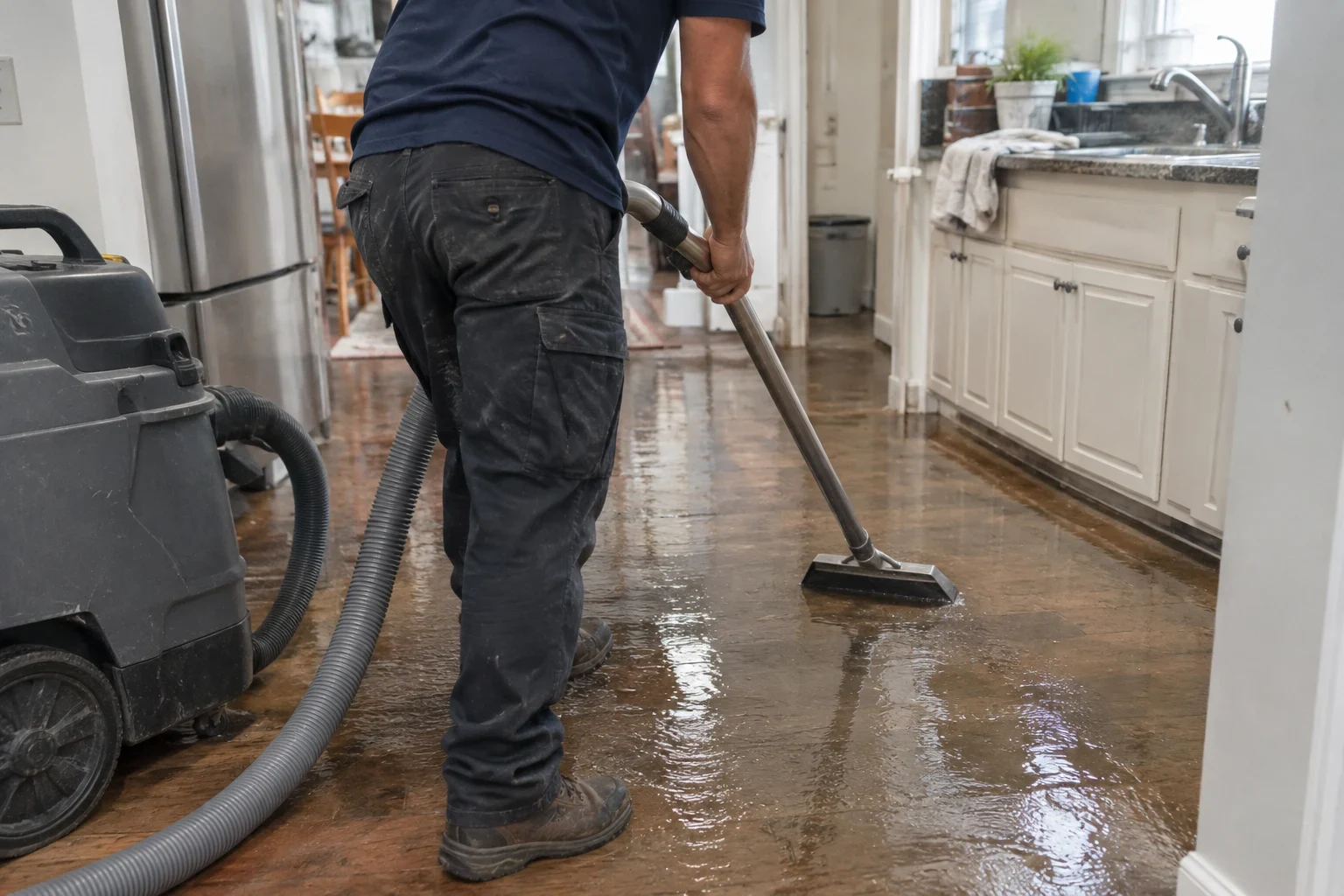
Standing water does more harm every hour it sits. We bring truck-mounted and portable extractors, pull water out of carpet, pad and subfloor, and keep the same small crew on your home from the first visit to the last. Emergency calls get us on site in 60 mins or less.
Getting the water out before it spreads
Water extraction is the first step after a leak or flood. We remove the water you can see and the water you can't: what is soaked into carpet pad, trapped under vinyl plank, and sitting in a crawlspace or finished basement. Fans alone can't do this. A wet carpet pad can hold several gallons per room, and until it comes out, drying takes far longer and costs more.
It's the right call for a burst supply line, a failed water heater, an overflowing tub, a sump pump that quit in a storm, or a slow leak you just found. The same people who show up for the extraction stay on for drying and dehumidifying, so nobody new has to relearn your house halfway through.
What the extraction work covers
- Stopping the source
- We find where the water is coming from and help shut it off before we start. If it's a line or appliance, we show you what failed.
- Moisture mapping
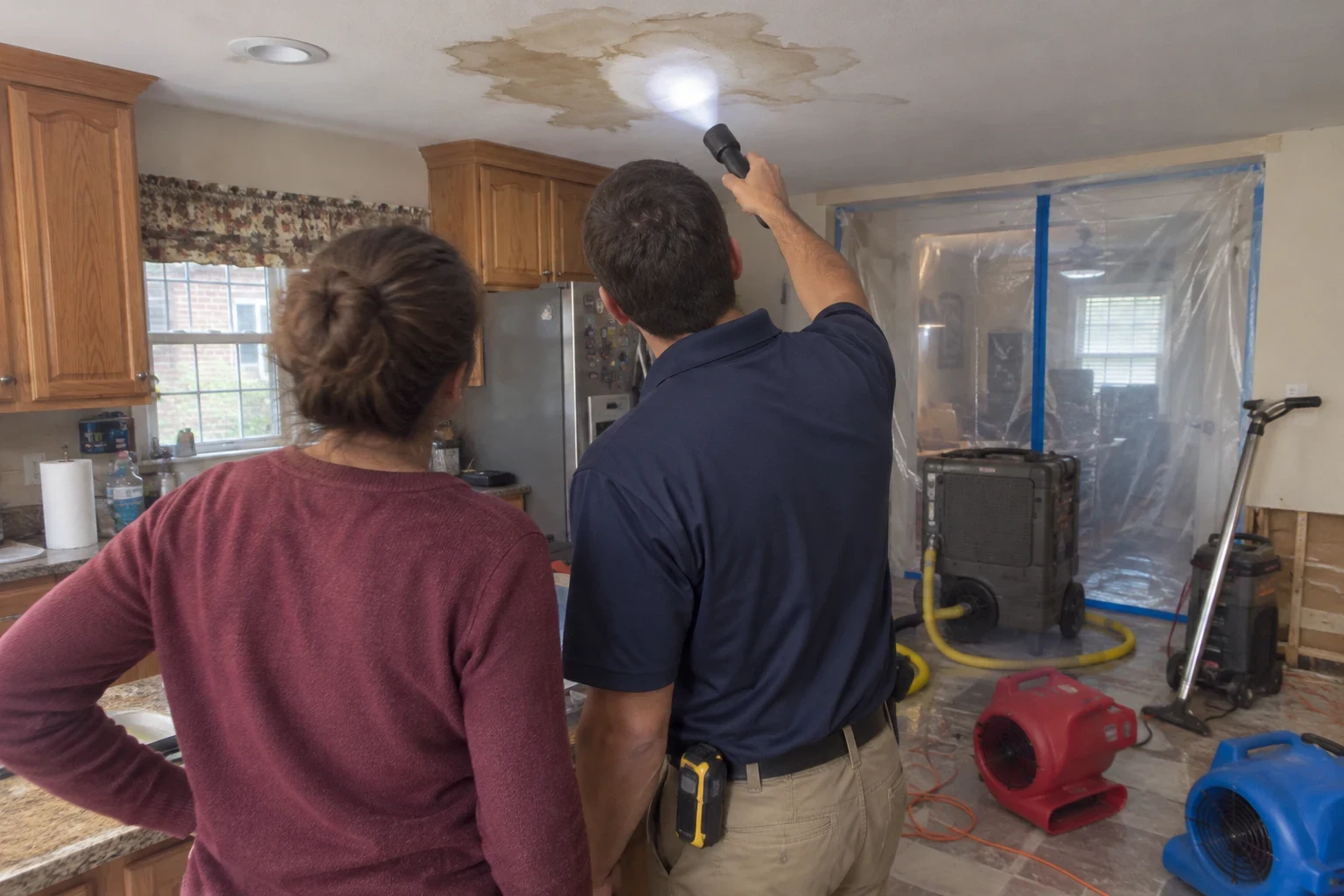
- We use moisture meters and a thermal camera to trace how far the water traveled. Water wicks up drywall and runs under baseboards, so the wet area is usually bigger than the puddle.
- Extraction from floors and carpet
- Truck-mounted units handle large volumes. Weighted extraction tools press water out of carpet and pad so we can decide if they can be saved.
- Crawlspace and basement pumping
- Submersible pumps clear standing water from basements and crawlspaces. Many older homes around Richmond sit on crawlspaces that hold water out of sight, so we check there even if the floor above looks fine.
- Moving and protecting contents
- We lift furniture onto blocks, move what we can out of the wet area, and photograph damaged items for your insurance claim.
- Removing what can't be dried
- Soaked pad, swollen particleboard and wet insulation often need to come out. We tell you why before we pull anything.
Signs you need water pulled out now
Carpet squishes underfoot
If you can press water out with your foot, the pad below is saturated. Fans won't reach it.
Standing water anywhere
Even half an inch on a basement floor is soaking into walls and anything stored there.
Baseboards or drywall darkening
A water line climbing the wall means water is wicking upward from the floor.
Floors cupping or lifting
Hardwood that cups and laminate that lifts at the seams are taking on water from below.
A musty smell after a leak
That smell often means water is still trapped somewhere. Left alone a couple of days, it can turn into a mold remediation job.
What moves the cost of water extraction
We look at the damage before we put a number on it, because no two wet floors are the same. The estimate comes to you in writing with each part of the work listed out. We work with most major insurance companies, and we're glad to walk you through what the claim process tends to look like. Coverage itself is decided by your insurer, not by us.
How much water and how far it spread
One wet room is a different job than a whole floor. Moisture mapping tells us the real size.
Type of water
Clean water from a supply line is simpler. Water from outside or a drain needs more care, and sewage is its own job under sewage cleanup.
What's under the floor
Carpet over concrete dries differently than hardwood over a crawlspace. Finished basements with drywall and insulation take more removal.
How long it sat
Water that's been there a day or two has moved deeper into walls and subfloor, which means more removal and longer drying.
How the job runs on the day
- 1
You call, we come out
Tell us what happened and where. We're on site in 60 mins or less and start with a free on-site inspection.
- 2
Inspect and explain
We walk the space with you, take meter readings and photos, and explain what needs to come out and what can be saved. No work starts until you agree.
- 3
Extract and remove
We pump standing water, extract carpet and pad, and pull out materials that won't dry. Our crew is IICRC certified and follows that standard for wet materials.
- 4
Set up drying
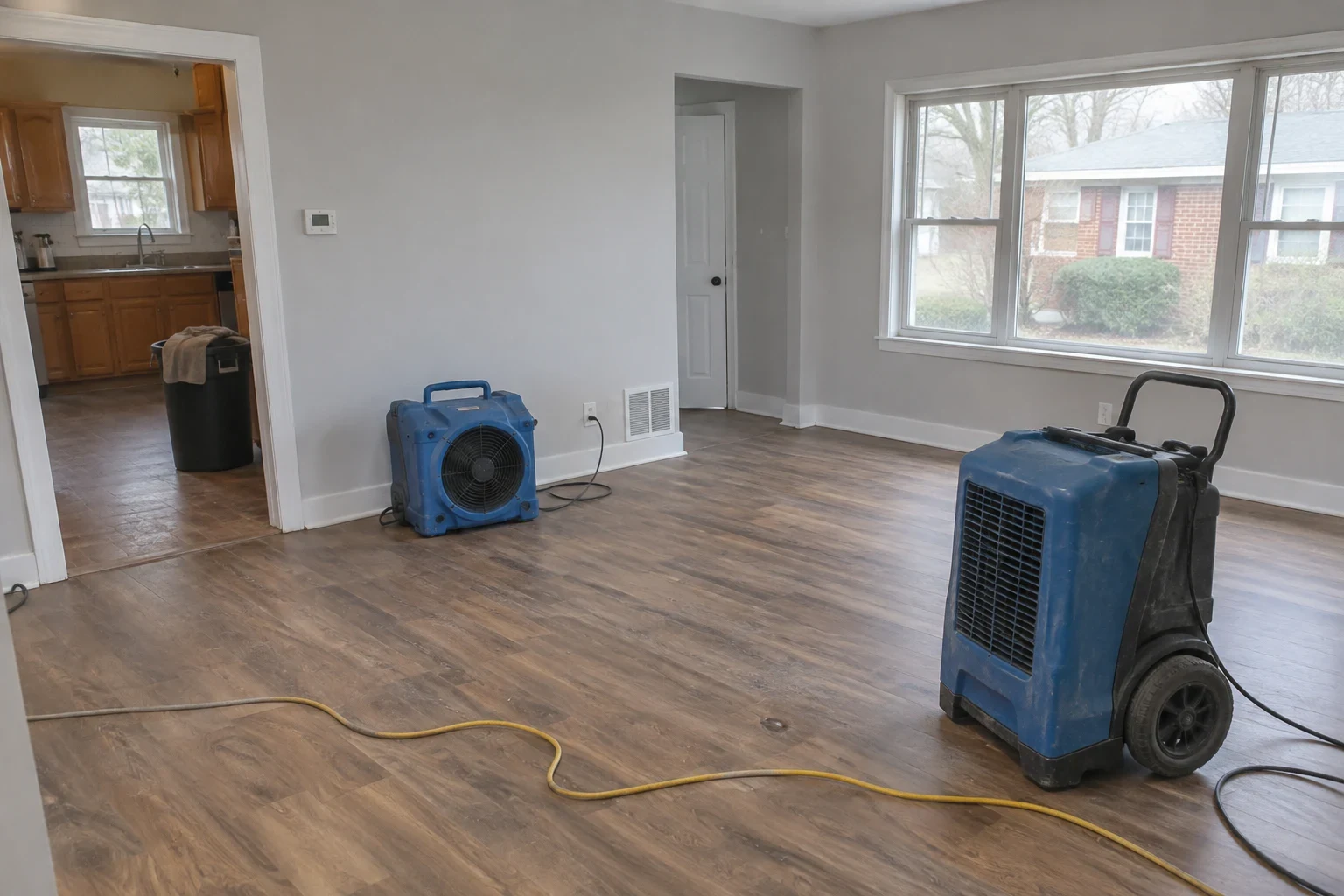
Once the water is out, we place air movers and dehumidifiers and log moisture readings. The same crew comes back to check them until the numbers say dry.
Water extraction questions
Can my carpet be saved?
Often the carpet can, if we get to it quickly and the water was clean. The pad underneath usually can't and is cheap to replace. If the water came from outside or a drain, we'll recommend removing both.
Can't I just use a shop vac and fans?
A shop vac gets surface water but leaves most of what's in the pad and subfloor. Fans then push moist air around without pulling it out. That's how small leaks turn into mold and warped floors.
Will insurance pay for this?
Many policies cover sudden water damage like a burst pipe. We work with most major insurance companies and document the job with photos and readings. Your adjuster decides what's covered.
Do I need to leave my home?
Usually not. The equipment is loud and you may lose use of a room for a few days, but most families stay put. We'll tell you up front if a space isn't safe to use.
Who will be working in my house?
The same small crew from start to finish. The people who extract the water are the ones who check the drying and answer your questions, so you're not explaining things to someone new each visit.
Water on the floor right now?
Shut off the water if you can and keep people off wet floors. We'll be on site in 60 mins or less, anywhere in Richmond, Bon Air or Mechanicsville, and the inspection is free.