ServicesDrying and Dehumidifying
Drying and Dehumidifying in Richmond
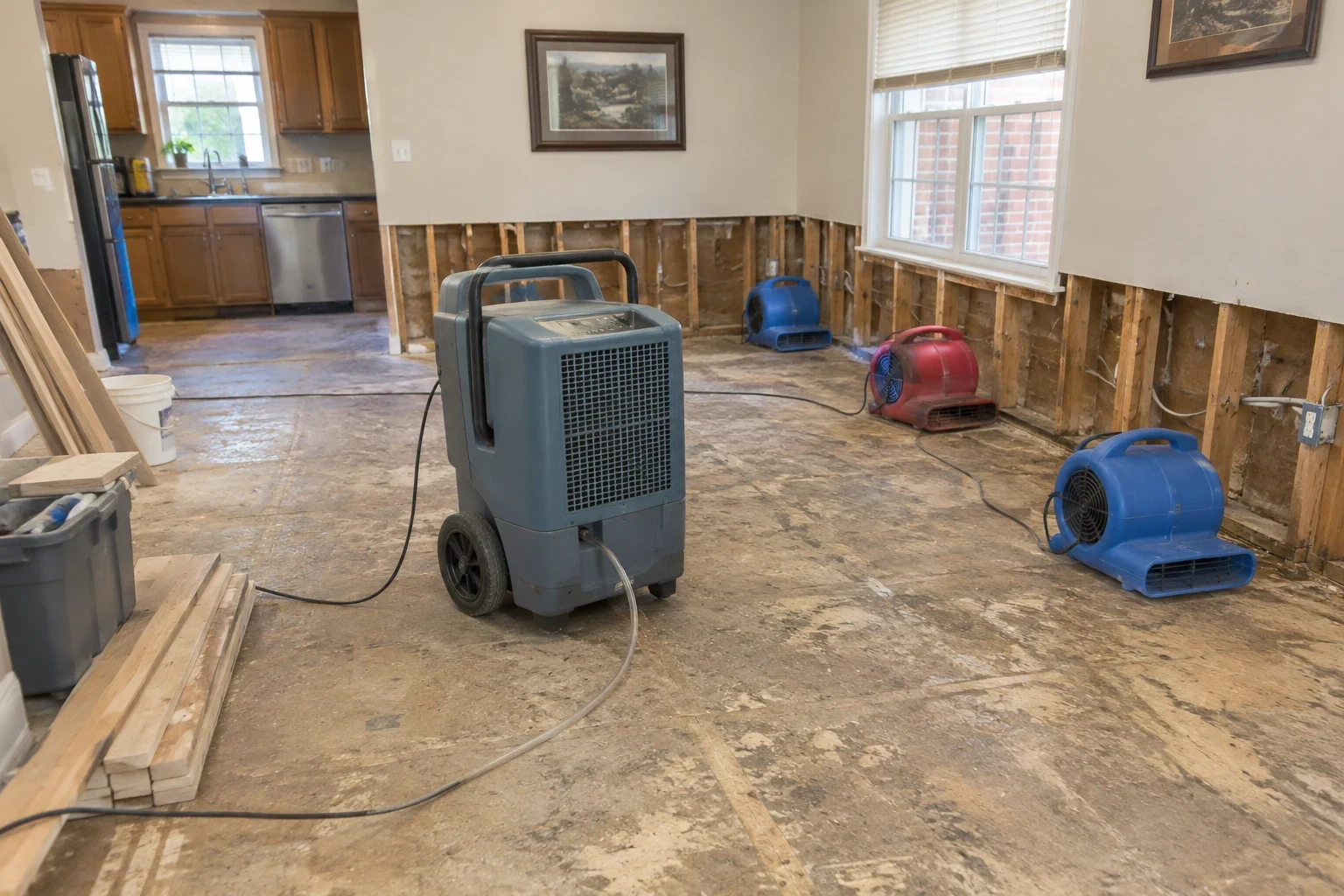
Getting the standing water out is only half the job. The rest is hiding in drywall, subfloor and framing. We set up drying equipment, measure moisture every day and keep the same crew on your home until every reading is back to normal.
Why wet materials need real drying, not just fans
Water soaks into drywall, wood floors, carpet pad and the bottom plates of your walls. A surface can feel dry in a day while the core stays wet for weeks. That trapped moisture is what leads to swollen floors, peeling paint and mold.
Our drying work uses air movers to pull moisture out of materials and dehumidifiers to pull it out of the air so it doesn't settle back in. We are IICRC certified, and we follow that method: take readings, set equipment where the numbers point, check again, adjust.
A small crew runs the job. The people who set the equipment on day one are the ones who come back to check it, so nobody has to relearn your house halfway through.
What our drying service covers
- Moisture mapping
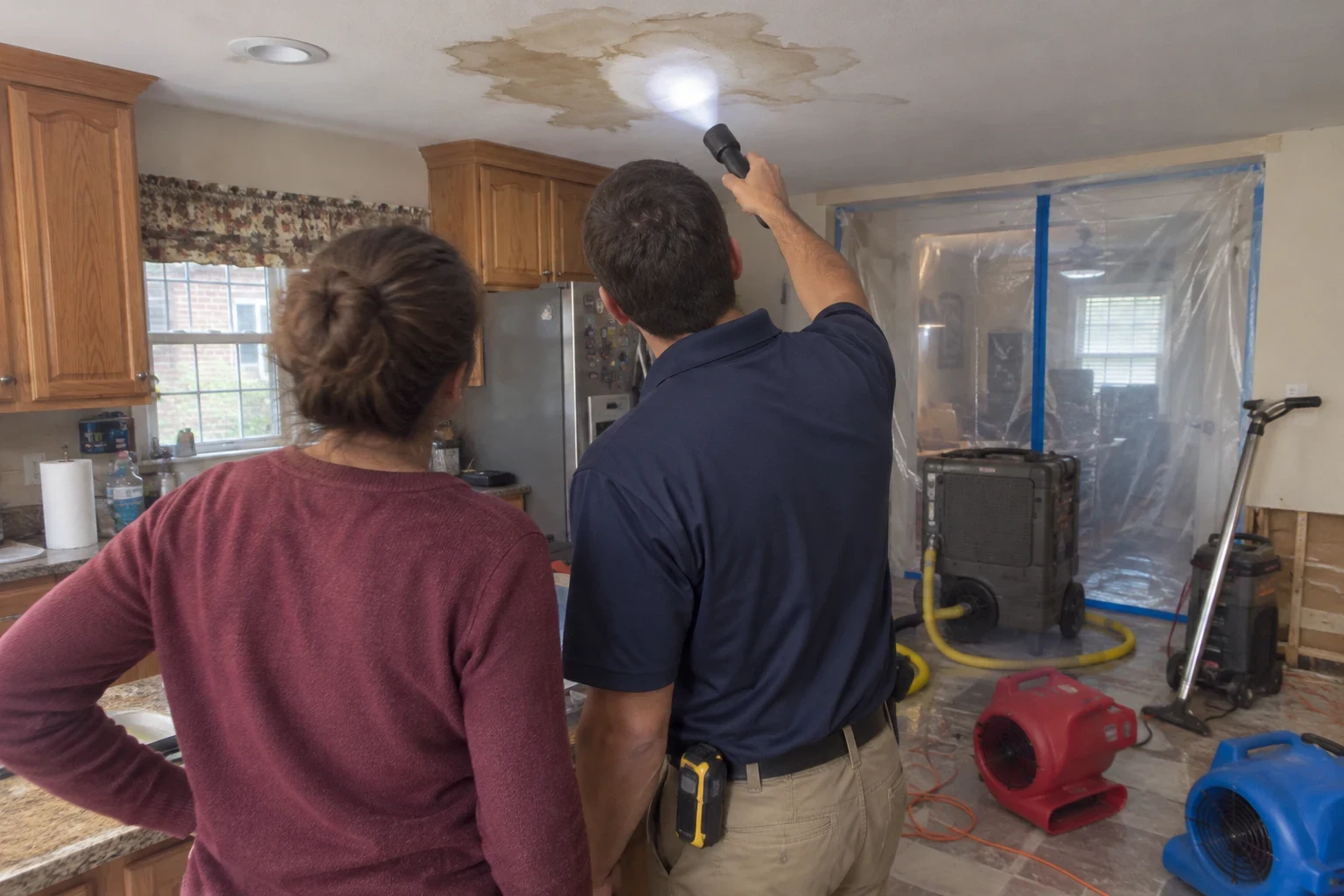
- We use meters and a thermal camera to find where the water went, including inside walls and under flooring. You get photos of what we find.
- Air movers and dehumidifiers
- We place equipment based on the readings, not by guesswork. Fans push air across wet surfaces and dehumidifiers take that moisture out of the room.
- Wall cavity and floor drying
- When water is trapped behind drywall or under hardwood, we may drill small holes or use drying mats to move air where it's needed. We explain any of this before we do it.
- Daily moisture checks
- Every day we log readings in the same spots and compare them to a dry area of your home. That log shows when drying is actually finished.
- Records for your insurer
- Readings, photos and equipment logs are the paperwork an adjuster usually wants. We work with most major insurance companies and can explain the process, though the claim decision stays with your insurer.
Signs your home needs professional drying
Floors that cup or feel soft
Hardwood that curls at the edges or laminate that lifts means water is under it. Carpet that feels damp a day later usually has a soaked pad.
Musty smell after a leak
A damp, earthy odor means moisture is sitting somewhere and starting to feed growth. If you already see spots, our mold remediation page covers that work.
Stains climbing the wall
Drywall wicks water upward. A tide line or bubbling paint a foot or more off the floor is a sign the wall is wet inside.
Humidity you can feel
Sticky air, foggy windows or condensation on pipes after water damage means the house is holding more moisture than it can shed. In a Richmond summer, a closed-up house rarely dries well without help.
Water sat more than a day
The longer water sits, the deeper it goes. If a leak ran overnight or while you were away, assume it reached materials you can't see.
How a drying job runs
- 1
We arrive and stop the spread
We are on site in 60 mins or less. If there's still standing water, we start with water extraction, because drying can't keep up with puddles.
- 2
We measure and plan
We take readings across floors, walls and anything under them, then mark the wet zone. You see the numbers and photos before we set anything up.
- 3
We set the equipment
Air movers and dehumidifiers go where the readings say. We tell you which outlets we're using, how loud it will be and what to leave running.
- 4
We check in every day
The same crew comes back, takes readings in the same spots and moves or removes equipment as areas dry. If something isn't drying the way it should, we tell you why.
- 5
We confirm it's dry
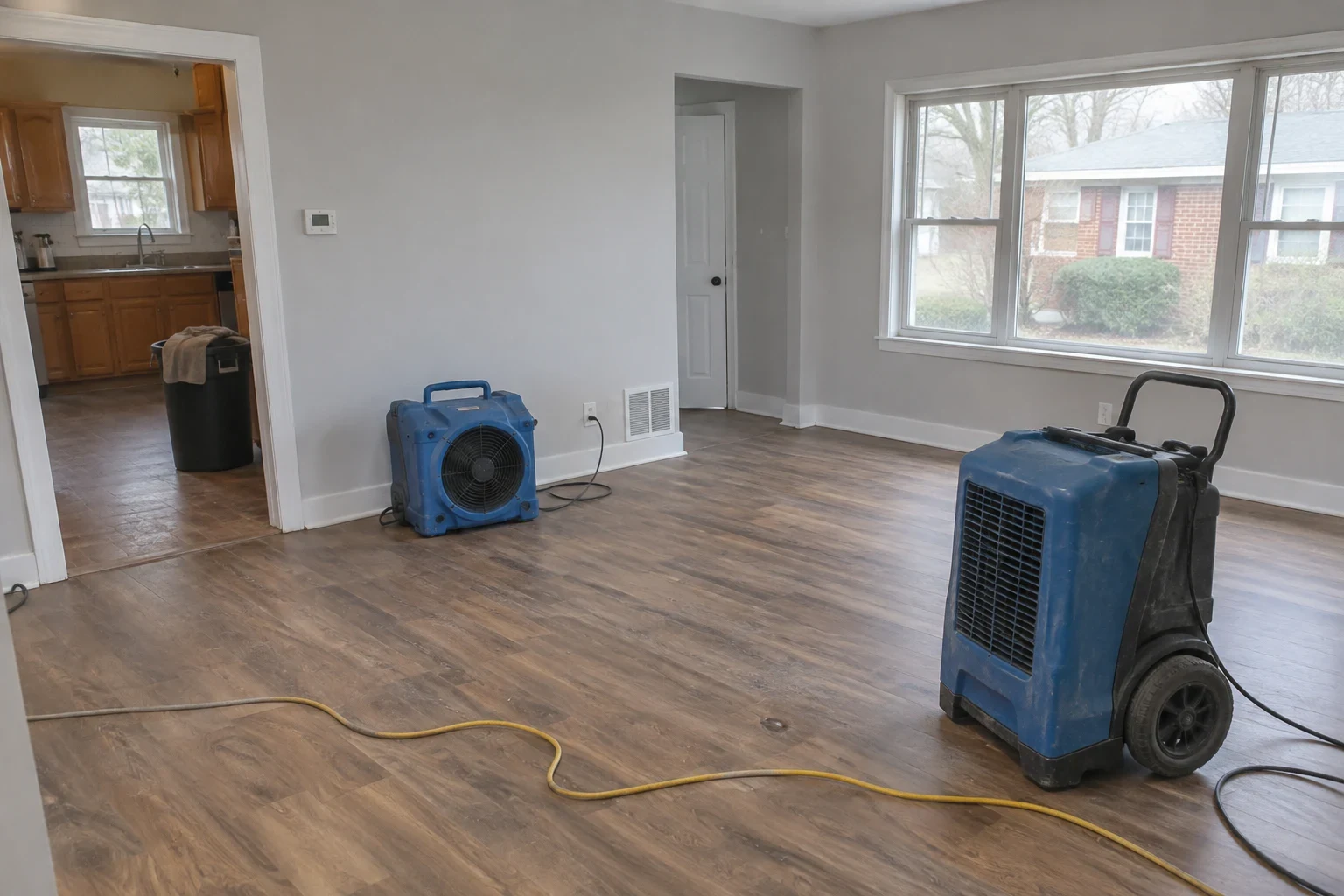
When readings match the dry reference, we pull the equipment and give you the final log. If materials have to come out, our repairs and rebuild crew picks up from there.
What affects the cost of drying
Drying is priced mostly on how much is wet and how long it takes to bring it back. We look first, then walk you through a written estimate with each line explained. Nothing gets added without talking to you.
- Size of the wet area
- A wet bathroom floor needs only a small setup. Water that spread through a finished basement or across several rooms calls for more equipment over a bigger space.
- Materials involved
- Hardwood, plaster and subfloor hold water longer than tile or bare concrete and need more time and care.
- How long the water sat
- Fresh water caught early dries faster. Water that sat for days often means removing wet carpet pad or drywall first.
- Access and hidden spaces
- Crawl spaces, wall cavities and areas under cabinets take extra setup to reach and dry properly.
- Days of equipment
- Each day the equipment runs adds to the cost, which is why we check daily and pull machines as soon as an area tests dry.
Drying and dehumidifying questions
Something not covered here? (804) 603-9078
How long does drying usually take?
Many jobs dry in three to five days, but it depends on the materials and how long the water sat. Hardwood and plaster can take longer. We go by the daily readings, not a set number of days, and we'll tell you where things stand at each visit.
Can I turn the fans off at night?
Please leave them running. When the machines stop, the damp air soaks right back into the wood and drywall, and the whole job ends up taking more days. If the noise is a real problem in a bedroom, tell us and we'll see what we can rearrange.
Why can't I just use my own fans and a box dehumidifier?
Household units can help with a small spill, but they can't move enough air or pull enough water for a soaked floor or wall. Without meters you also can't tell when the inside of the material is dry. That's where most hidden mold problems start.
Can my hardwood floors be saved?
Often, yes, if we get to them early. We use drying mats that pull moisture up through the boards. If the wood has buckled badly or sat wet too long, we'll tell you plainly that replacing it makes more sense.
Will insurance pay for drying?
Many policies cover drying after a sudden leak like a burst pipe, but every policy is different. We work with most major insurance companies and give you the readings and photos an adjuster usually asks for. Your insurer makes the final call on coverage.
Do I have to leave my home while you dry it?
Most people stay. The equipment is noisy and warm, and some rooms may be off limits for a few days. If the water was from a sewer backup, that's a different job, covered on our sewage cleanup page.
Get the wet out before it does more damage
The sooner drying starts, the less has to be torn out. Give us a call and the same small crew will see the job through from first reading to last.