ServicesFlood Cleanup
Flood Cleanup in Richmond
Water that comes up from outside is never clean. It carries silt, soil and whatever it crossed on the way in. We pump it out, pull what can't be saved, clean and sanitize what can, and dry the structure. One small crew stays on your home until it's finished.
What flood cleanup is and when you need it
Flood cleanup is not the same as a burst pipe. Water that comes in from outside, through a basement wall, a window well or under a door, is treated as contaminated. It can carry soil, lawn chemicals, fuel and sewage. That changes what we can dry in place and what has to come out.
If water rose into your home from a heavy storm, a creek or a yard drain that couldn't keep up, this is the right page. For a clean-water leak from a supply line, our water extraction and drying and dehumidifying services usually fit better. If sewage came up through a floor drain or toilet, see sewage cleanup.
We're a small team. The people who show up the first night are the ones who pull the carpet, set the dryers and walk you through the last moisture readings. You won't explain your basement to a new face every day.
What our flood cleanup covers
- Water and mud removal
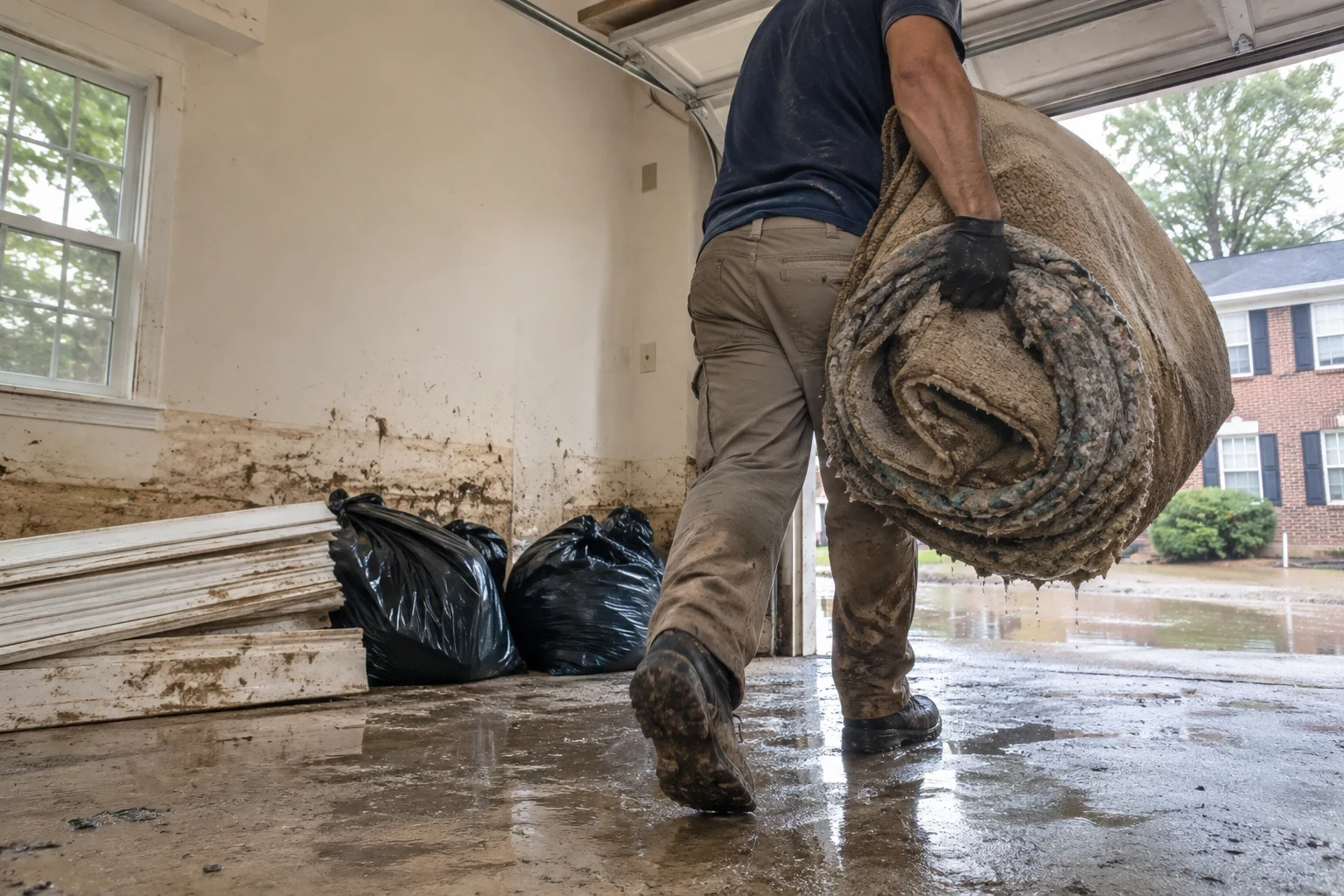
- We pump standing water and extract what's left from floors and carpet. Then we squeegee and shovel out the silt. That slick layer holds most of the contamination, so it all goes.
- Flood cuts on drywall
- Drywall wicks water upward like a paper towel. We cut it out above the wet line so we can reach the framing and pull the soaked insulation behind it.
- Removing what can't be saved
- Carpet pad, insulation, particleboard cabinets and most upholstered furniture that sat in flood water usually have to go. We photograph and list each item before it leaves the house.
- Cleaning and sanitizing
- Concrete, framing and hard surfaces get washed and treated with an antimicrobial. This is the step that keeps odor and mold from showing up a month later.
- Structural drying
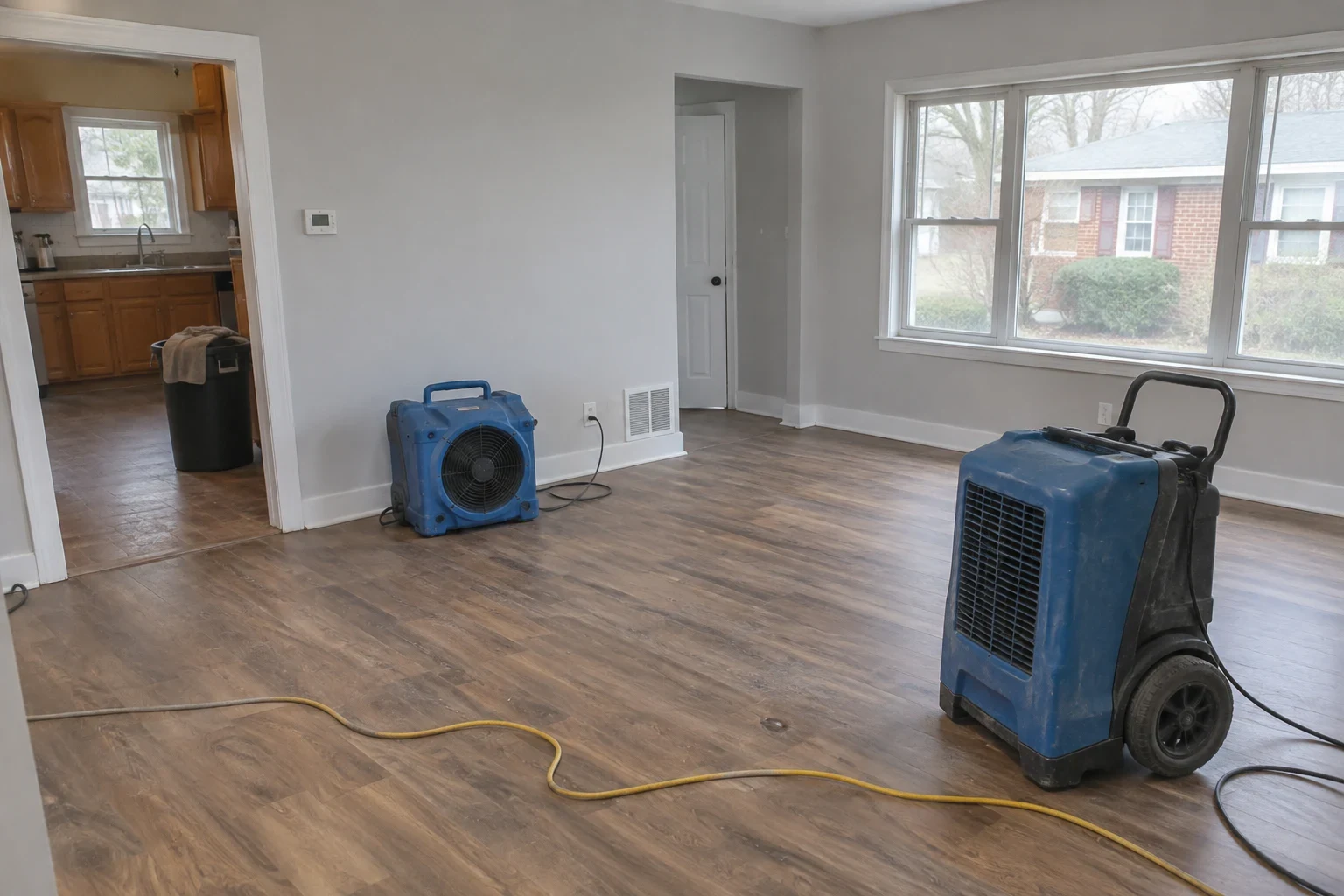
- Air movers and dehumidifiers run until wood and concrete read dry on our meters, not just until the surface feels dry. We log the readings on every visit.
- Records for your claim
- We work with most major insurance companies. We share photos, moisture logs and a line-item scope with your adjuster. The coverage decision stays with them.
Signs you need flood cleanup, not just a mop
Water came in from outside
If it came through a foundation wall, window well or doorway, treat it as dirty water. Clear-looking flood water still carries bacteria.
A line on the walls
A tide mark, bubbling paint or soft baseboard means the drywall has pulled water up. The insulation behind it is likely wet too.
A musty smell after a day or two
That's mold or bacteria getting started. In a humid Richmond summer it can begin within a day or two of the water.
Floors that swell or flex
Laminate that peaks at the seams, or a subfloor that gives when you step on it, has taken on water underneath.
Wet crawl space or floor ducts
Flood water under the house or in floor ducts can push odor and moisture into every room.
What moves the cost of flood cleanup
We can't price a flood job over the phone, because most of the cost depends on what we find once the water is out. After the free on-site inspection you get a written, line-item estimate. If something new turns up once walls are open, we show you before we do more work.
How much got wet
Square footage and the number of rooms or levels set how much equipment and labor the job takes.
Depth and wicking height
Deeper water and higher wicking mean taller flood cuts, more insulation out and more material to replace.
Finished or unfinished space
A bare concrete basement cleans up fast. A finished one with carpet, built-ins and drywall takes far more tear-out.
How long the water sat
Water left for days soaks deeper and can start mold growth, which may add mold remediation to the job.
Access
Low crawl spaces and tight basement stairs slow the work and can change how we haul out debris.
How a flood cleanup job runs
- 1
The call and arrival
Tell us where the water came in and how deep it got. We're on site in 60 mins or less, day or night. First we make sure it's safe to walk in, including power to wet outlets.
- 2
Walk-through and written plan
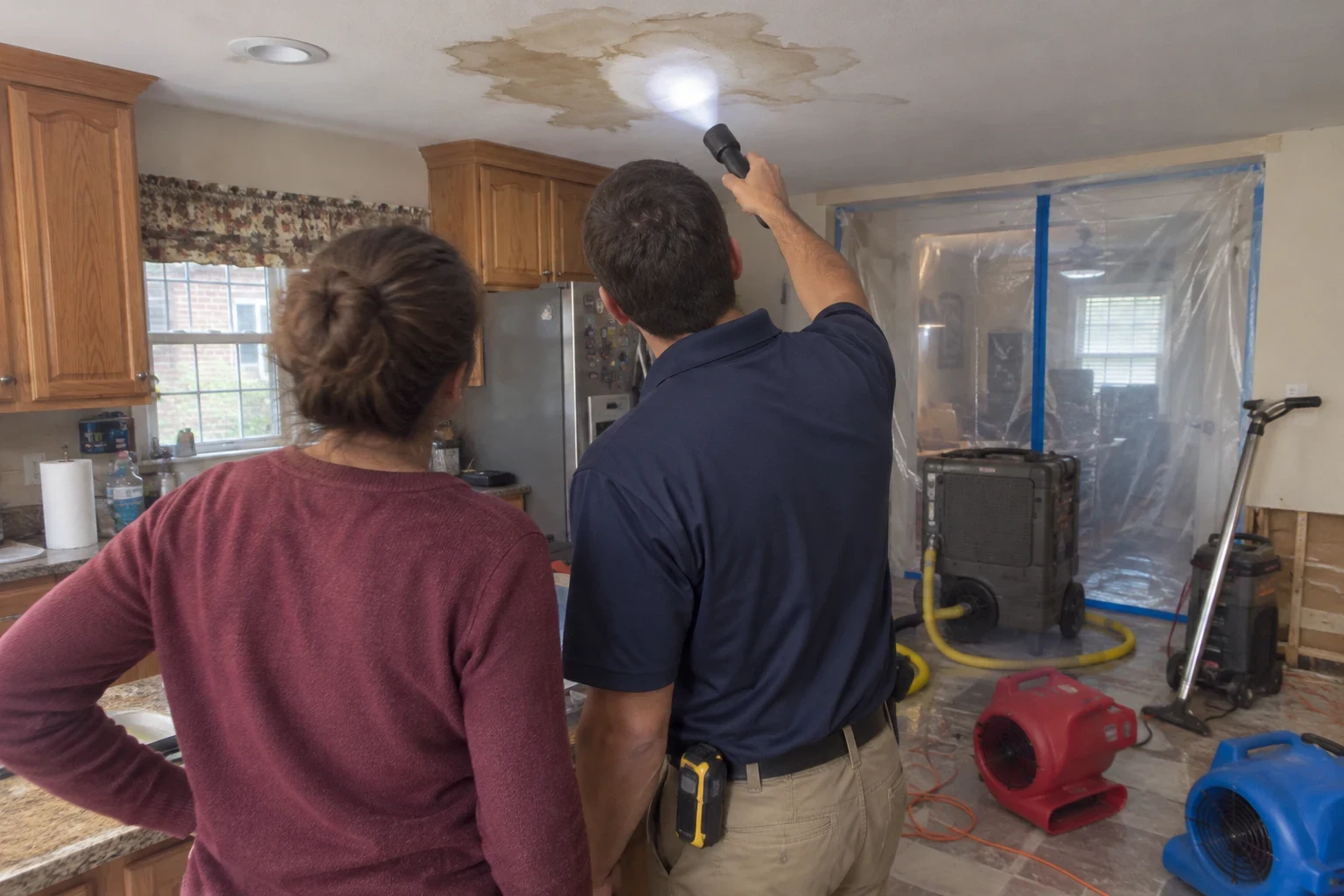
We go room by room with a moisture meter and a camera. We tell you plainly what has to come out and what can be dried. You see the plan in writing before tear-out starts.
- 3
Pump out, tear out, clean
Water and mud come out first, then wet materials. We bag debris, wash and sanitize surfaces and treat the framing before drying begins.
- 4
Dry and check
Drying gear usually runs several days. The same crew comes back to take readings and move equipment until the numbers say it's dry.
- 5
Put it back
Once it's dry, our repairs and rebuild service can replace drywall, flooring and trim, so you aren't hunting for a separate contractor.
Flood cleanup questions we hear
Does homeowners insurance cover flood damage?
Often it doesn't. Many standard homeowners policies exclude water that rises from outside, and flood coverage is usually a separate policy. Check your declarations page or ask your agent. Either way, we document everything, and we work with most major insurance companies once a claim is open.
Can I clean up flood water myself?
A little shallow water on bare concrete, maybe. Once it has soaked drywall, carpet or insulation, those materials need to come out and the framing needs sanitizing. If you go in, wear boots and gloves, and don't run fans over standing water, since that can spread contamination.
Do you have to remove my drywall?
Usually some of it. Flood water is dirty, so wet drywall gets cut out above the wet line. How high depends on how far the water wicked, and we measure that with a meter instead of guessing.
How long does flood cleanup take?
Tear-out and cleaning often take a day or two. Drying usually runs several more days, longer for thick concrete or a deep crawl space. We give you a timeline at the start and update it on each visit.
Is your crew trained to handle flood water?
Yes. We're IICRC certified and follow the industry approach for contaminated water. That means protective gear, containment where it's needed and sanitizing before anything gets dried.
Get the flood water out of your home
Tell us where the water came in and we'll send the crew that will see your job through. The on-site inspection is free.